
For anyone curious about why my two biggest interests are so “different” from one another…here’s why they’re not:
- All knowledge is useful knowledge. Taking interest in a wide variety of subjects gives you that much more material to work with when it comes to writing – you can get rich, specific detail and a broad spectrum of characters and settings just by being curious…and you never know what will pop up that might give you an idea. In archaeology, you never know what might come in handy, either. Obviously, you need a smattering of history and geology of the area you’re working in, but then there are things like being aware of what plant species are native, which were introduced and when and for what purpose (for example, Vinca minor – graveyard ivy – isn’t native to Kentucky, doesn’t spread much on its own, and was a common graveyard planting in the 19th century); things like the fact that tanneries used human urine as a chemical component of processing leather (and therefore might be located near a lavatory in a historic building); things like what parts of an animal have the highest caloric value…you get the idea. Anything might turn out to be useful.
- Everything is writing / Everything is archaeology. This is kind of along the lines of the previous. Anything you know about, hear about, learn about, can potentially be applied to fiction writing, and the same goes for archaeology. When you think about it, since archaeology is essentially the study of the human past, then any human behavior, and any natural phenomenon or environment that humans have ever had a relationship to, well…that pretty much covers everything. When it comes to writing, everything you observe, think about, act upon, receive responses from, and interact with is story potential.
- Getting into a point of view. Unless you’re writing a fictionalized autobiography, fiction requires you to step out of your own worldview and into the worldview of somebody (or more than one somebody) else. Any branch of anthropology, including archaeology, requires the same thing…except you’re doing your best to step into the worldview of real people, living or dead (depending on what you’re working on).
- Beginning, Middle, and End (and sometimes Epilogue). Obviously, a story has to have a beginning, middle, and end – even if it’s a flash fiction story, something happens, something changes, someone’s mind opens or closes or shifts. In archaeology, we have Phase 1 projects (surveys, which might be done with ground penetrating radar or electromagnetometry or by walking the site or by shovel testing), Phase 2 projects (“Hey! We found stuff in Phase 1 and someone is willing to pay for us to find out more!!”) where you dig test units in areas that promise evidence of features or artifacts, and Phase 3 projects (when you excavate a site in detail). Not every site gets to Phase 2, and not all Phase 2 projects go on to a Phase 3. It depends on money, the site’s potential for adding to our knowledge of history/prehistory, and why the site was being excavated to begin with (Who funded it? Did they fund it voluntarily, or for compliance with the law before their development could move forward? How fast do they want the archaeologists out of their hair?) Or you could view the beginning, middle, and end of archaeology this way: Excavation, artifact processing, and report writing. Because those three steps happen on any project, at any level (unless you’re a lousy archaeologist). The epilogue, in that case, could be seen as public presentations, or in some cases the establishment of a historical center or local museum on site.
- Drinking, Swearing, and Nerding Out. All three of these activities are near and dear to both archaeologists and writers. At least, 90% of all the archaeologists and writers I know. Preferably, do all three at the same time while in the company of other writers/archaeologists after a day of slaving away at the computer/with the trowel.
 There is so much to say about my trip to Spain, I don’t know where to begin. Do I post about the food, the friendships, the excursions, the many things I learned, the process of trying to remember a language I haven’t spoken in about 12 years, the seminars, or the excavation? Well, the excavation and the seminars, I know I can save for a guest post for Pintia! But that still leaves a lot of ground to cover. So here’s a list, to start with:
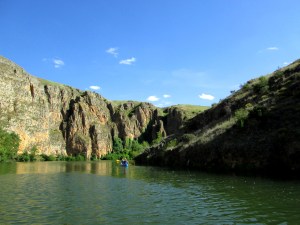 Fell in love with: Northern Spanish countryside. Absolutely stunning landscape with plains, hills, mountains, rivers, canyons, and breathtaking views; gorgeous skies; beautiful and ABUNDANT wildflowers and wild herbs…. Couldn’t get enough of it!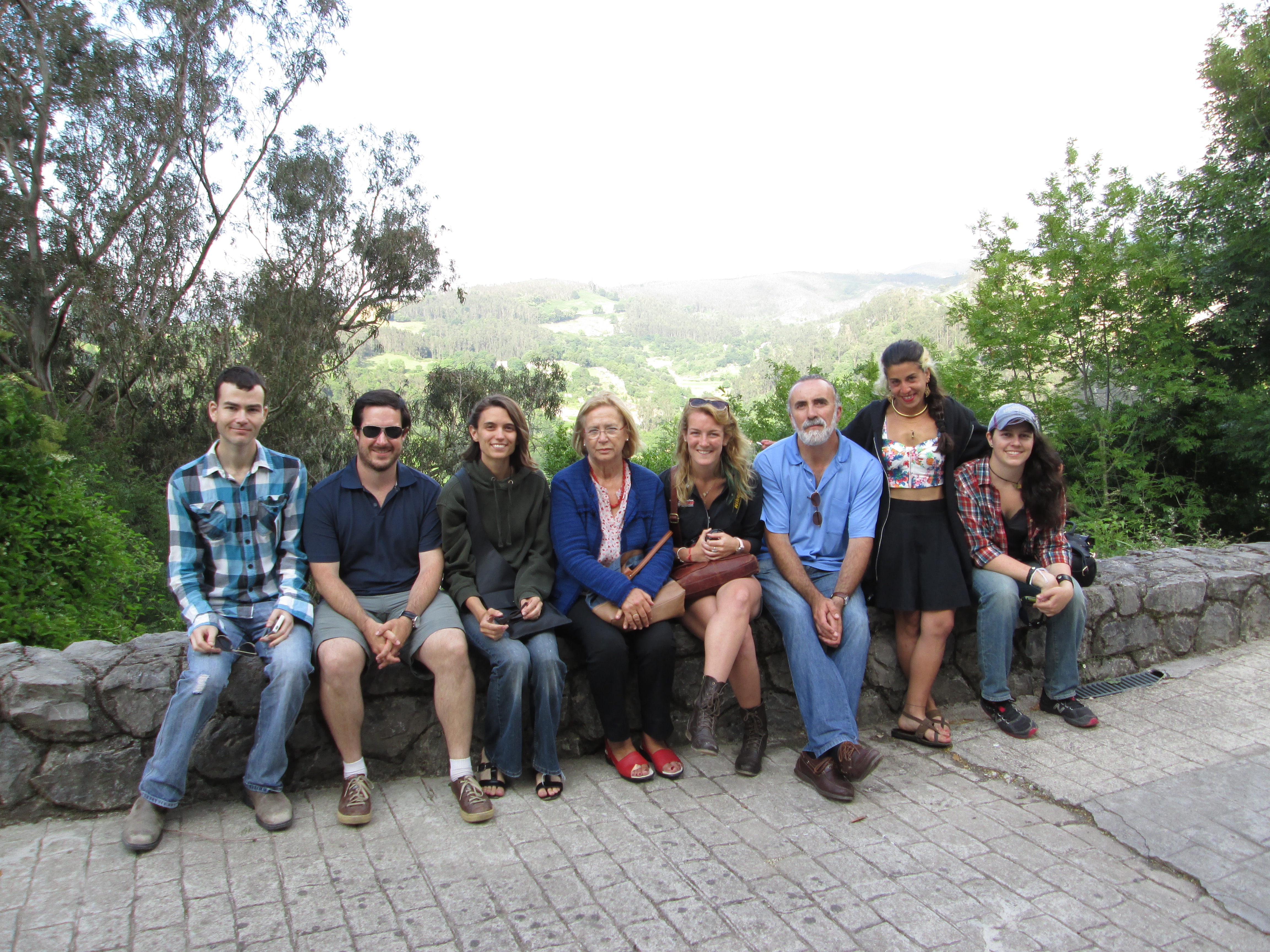


 Sara Marian