Knight at the Crossroads

The new header image on my site, in case you’re wondering, is part of a photo (of an oil painting) I took in the Russian State Museum in St. Petersburg in 2013. The painting is Knight at the Crossroads by Victor Vasnetsov, completed in 1878. Here is the full painting, pulled from Wikimedia:

TheKnightAtTheCrossroads

Crossroads are a big thing in many folk tales, including Russian folk tales, but in Russia, crossroads are frequently used as a metaphor for the pull between East and West, Asia and Europe, tradition and modernization. In the last quarter of the 19th century, Vasnetsov’s imagery would’ve been even more striking than it is for me to look at, today, as a non-Russian – and it is striking, even out of its context.

Guest Post with Jack Wallen

I’m not updating my own site because I’m busy being  interviewed over on Jack Wallen’s site! Jack writes lots and lots and lots of super-cool books (seriously, like every 2 months, guys!), ranging from steampunk to horror to zombie apocalypse, and sends many of them to me for editing. So go check out my interview, and then go check out the rest of Jack’s site!

Imaginarium 2015

Last weekend, I attended Louisville’s second annual Imaginarium Convention for creative writers (and readers). I went last year, too, and have had a blast both times. Great programming, great networking, and great company. Plus, it’s held in the same hotel where the long-gone Rivercon Science Fiction Convention used to be held, which means it brings back great memories for me of attending my very first convention with my mom, 23 years ago. I’ve decided that I need a reversible hat to wear next year, with editor on one side and writer on the other, so people will know from which point of view I’m speaking.

This year, I was on 5 panels: one about the role of an editor; one about the writer-editor relationship (and how the editor is, in fact, your friend, even if they put enough red on your manuscript that it would never make it past Hollywood censorship); one about choosing and pulling off either a lone hero tale or a heroic group story (which, ironically, had neither a lone hero for a speaker nor a heroic group of speakers, but yet a third narrative choice: a dynamic duo of speakers); a panel about steampunk (which was lots of fun, and in which we discussed various other ‘punks, too, such as deiselpunk, clockpunk, etc.); and a panel about plotting, and how different writers do it (or don’t). So now you know the kinds of things writers sit around and talk about in secret.

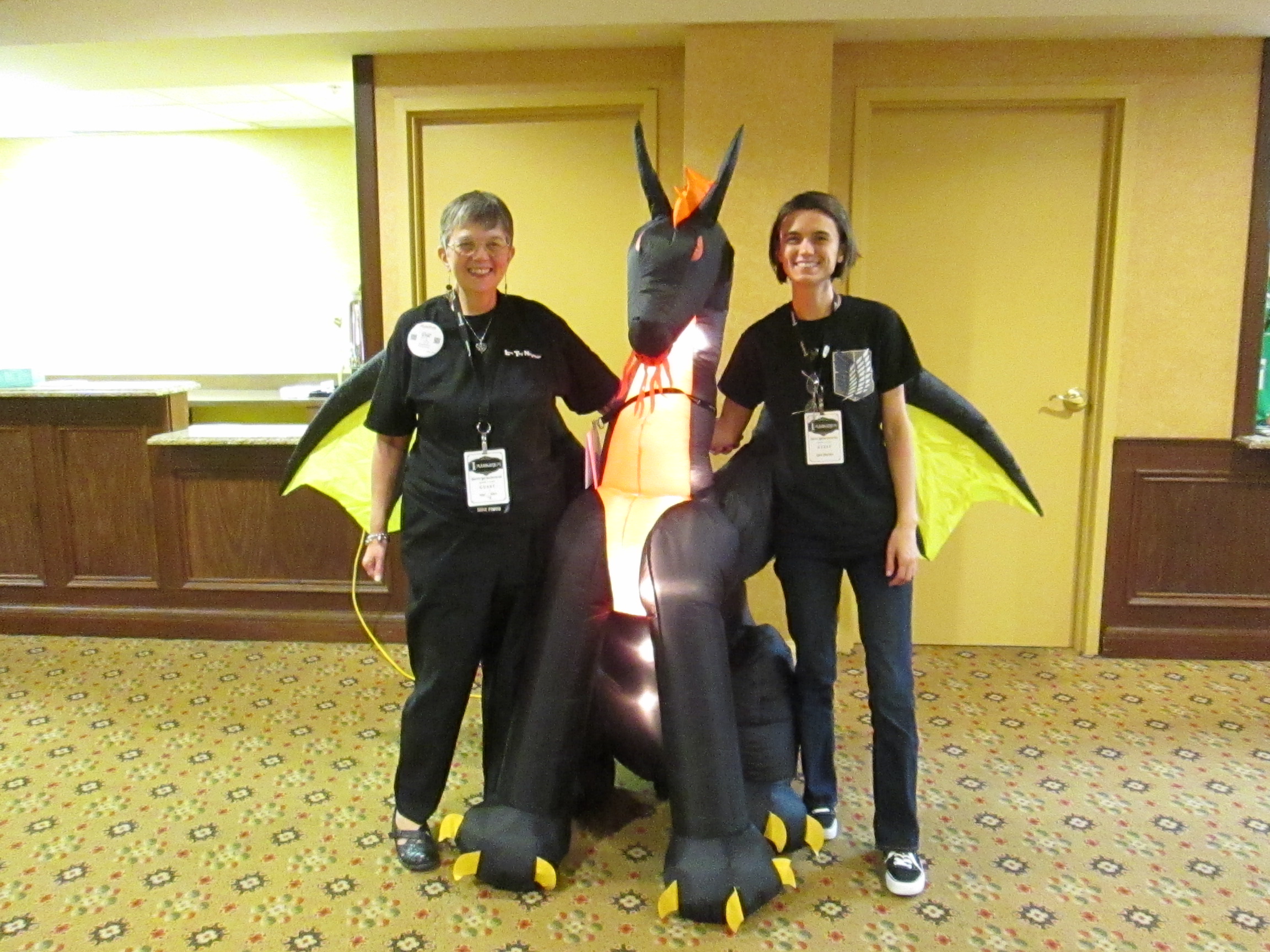
I also attended a couple of panels as an audience member – one about balancing a day job and a writing schedule (because it ain’t easy getting back into a routine after four years away from creative writing), one about writing non-human characters (because the sequel to Erica Flynn includes some), and one about writing the zombie apocalypse (because two of my editing clients do). There were a bunch more I *wanted* to attend, but they were at the same times as the panels I was speaking on. These included, but weren’t limited to, panels on historical writing, unconventional fantasy, and comic books. As you can see, there’s a pretty good variety of topics at Imaginarium, which is one of the reasons I love it! Plus, they had a dragon this year. I mean, how can I not love it?

If I could change one thing about Imaginarium, it would be to add a tea/coffee room for the convention, so there would be a hangout spot to just shoot the shit with other writers. Because writers, myself included, love nothing better than to shoot the shit over caffeinated beverages!

IMG_3886

Mom, the dragon, and me

Native Plants

I’ve become semi-obsessed with native plant species in the past few years – partly as a result of two awesome classes I took in undergrad, but increasingly also because it’s useful to know the ecology of places where you’re doing archaeology. And also because I have this dream garden I’m planning for when I have a house (which I don’t), and I’m very excited about the idea of using native flora to attract and support local fauna – birds, butterflies, lightning bugs, dragonflies, bats, frogs, toads, skinks, turtles…I’m interested in pretty much any wildlife that isn’t parasitic or deadly.

I decided to post about some of the native species I’ve encountered in the field this month, since I’ve come across some of my very favorite examples of why planting native is awesome. First, there’s this gorgeousness:

20150817_144917

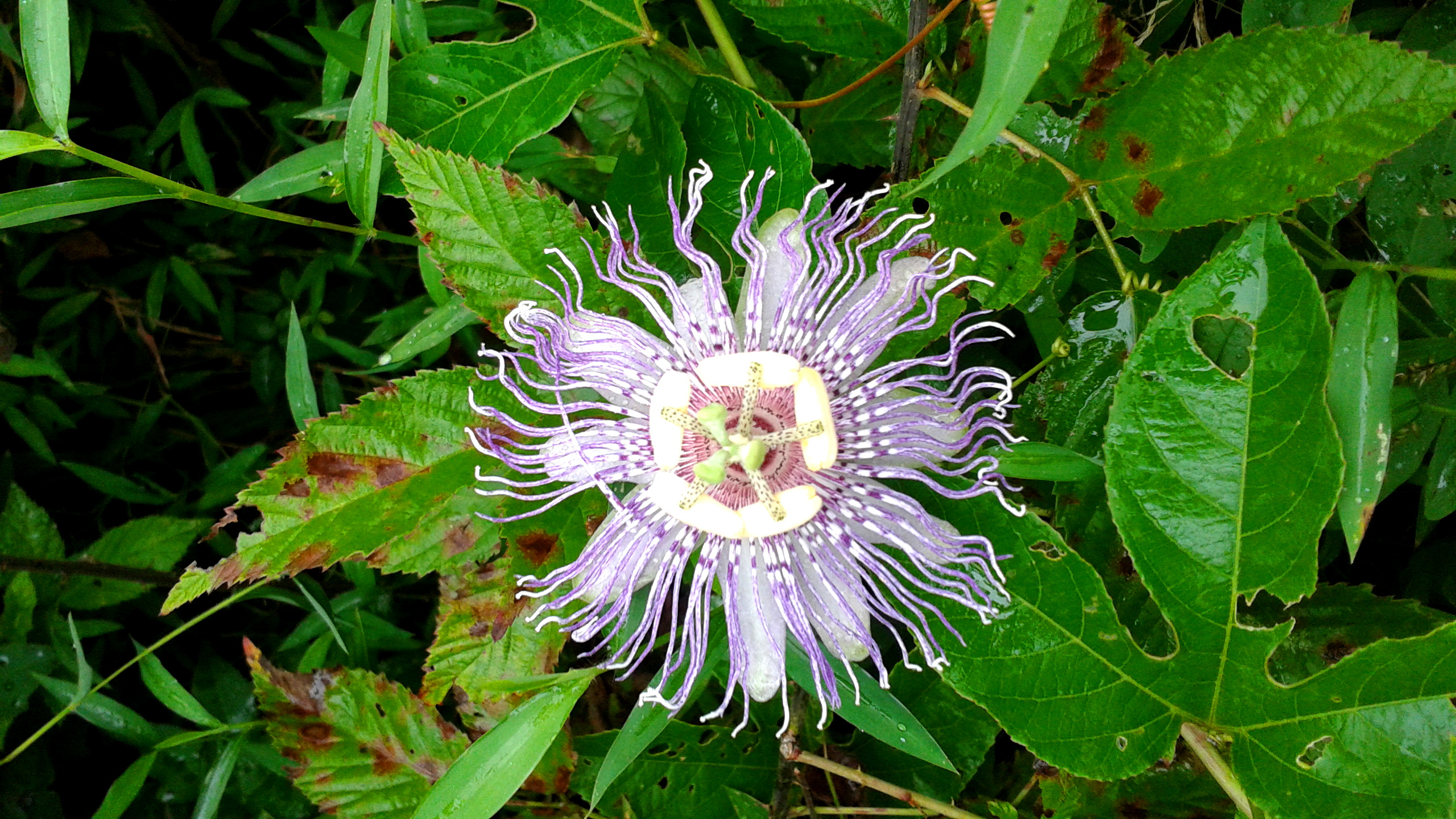
Passiflora incarnata (Maypop)

It’s a passionflower, and yes, it’s edible, according to Temperate Climate Permaculture (they even give instructions for using the fruit and leaves in cooking and teas). Not only is it gorgeous and tasty, it’s also good for your friendly neighborhood local pollinators, including bees, butterflies, and hummingbirds. And who doesn’t want butterflies and hummingbirds in their garden??? Local birds like the fruit, too, so you can consider this a self-filling bird-feeder that squirrels won’t ravage.

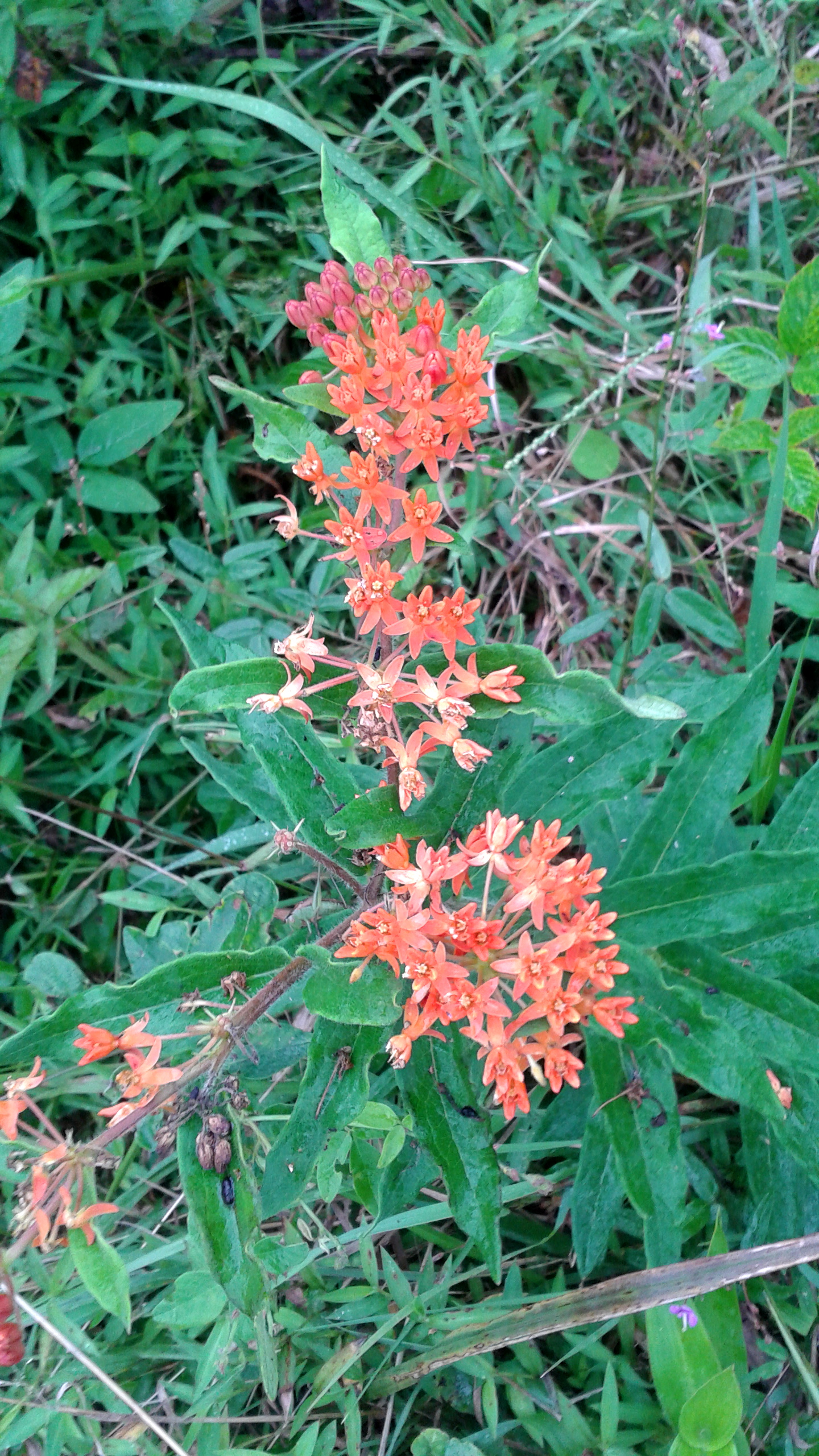
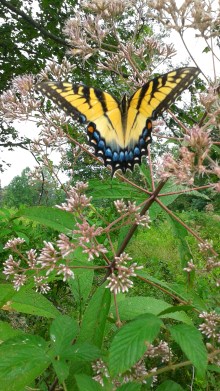
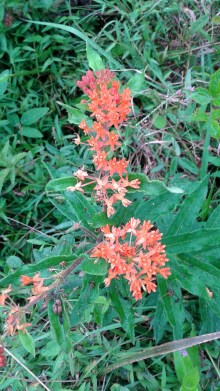
Even more attractive to butterflies are several (very pretty!) varieties of native milkweed, which can be hot pink, pale pink, dark purple, and orange (I’ve also heard of red and yellow varieties, but I don’t know if those are native to this area or not). In the field this month, I worked in two areas full of milkweed plants, and there were literally dozens and dozens of butterflies going crazy over the flowers. Hummingbirds and bees are also fans, but the swallowtails, red spotted purple admirals, and monarchs were definitely the most enthusiastic dudes at the concert.
20150817_14131920150817_145147

Swamp milkweed with Eastern tiger swallowtail (left) / Butterfly milkweed (right)

Native plants also support lightning bugs (who, like bees, are declining in population these days). Aside from being little twinkles of happiness, lightning bugs also EAT MOSQUITOES – so do dragonflies! So there’s an incentive for you to plant a rain garden of native species to attract lightning bugs and dragonflies.

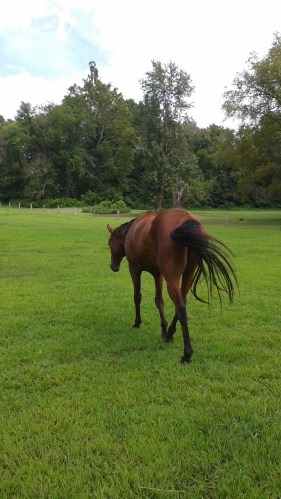
I also met this horse last week, and there’s nothing that says Kentucky like a handsome horse, so here:
20150821_130804

This horse was apparently taught as a foal not to take apples from strangers, because he wasn’t having it.

Back When I Could Draw….

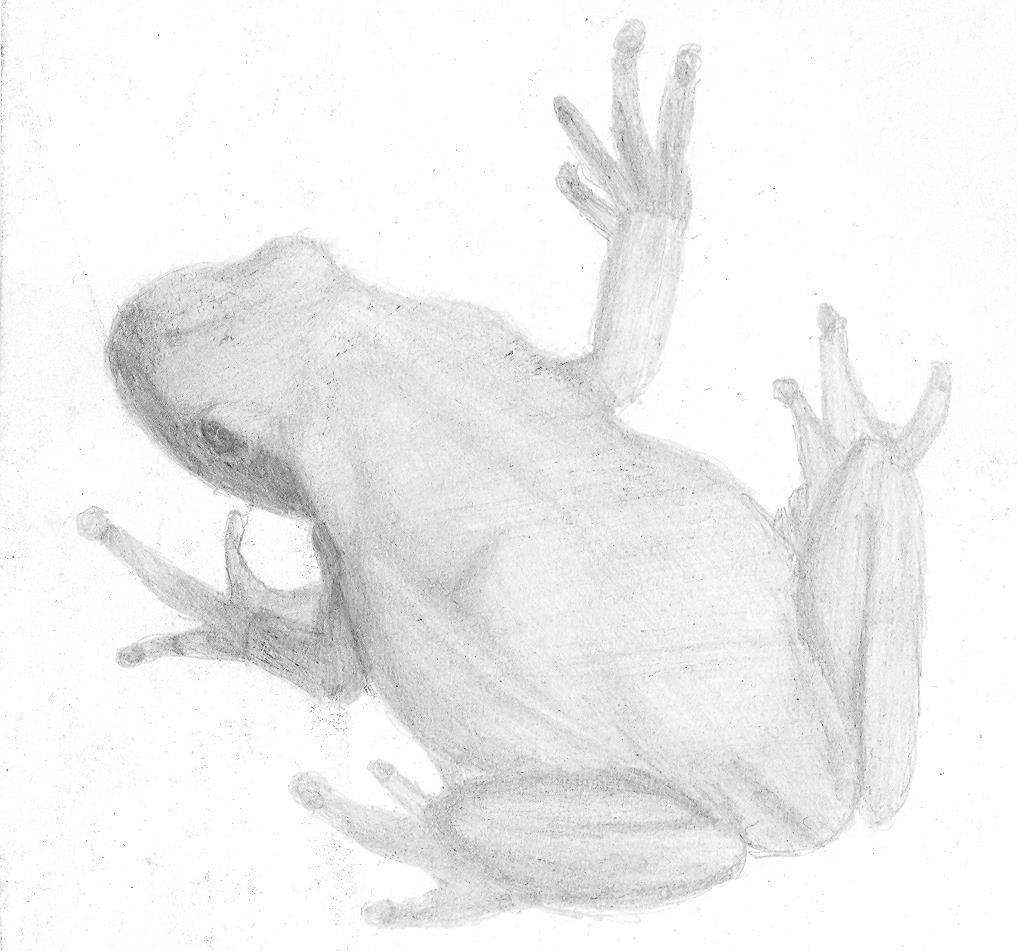
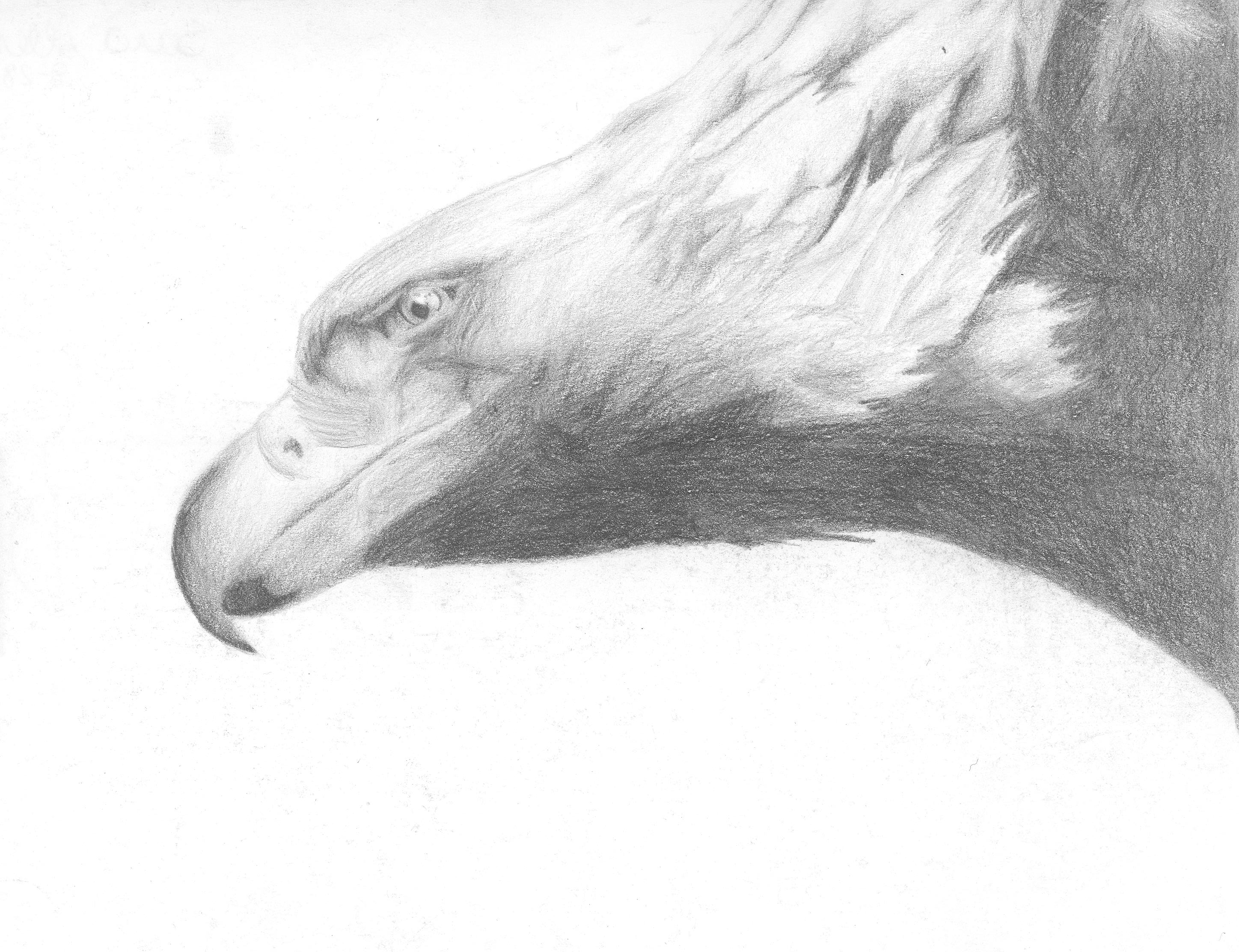
Once upon a time, around 1999-2003 or so, I used to be able to draw. I’m out of the habit now, although I still occasionally do an art project. But I’m scanning in some of my old drawings so I’ll have digital copies of them, which is a bit of a trip down memory lane. The two drawings included in this post were done toward the beginning (the tree frog) and end (the hawk) of my first semester of art class at Corydon High School, back in 1999. I have many good memories of learning to shade without scribbling in that class, most of them with a soundtrack of Big Bad Voodoo Daddy and the Squirrel Nut Zippers, with many good conversations with my friends and with our awesome art teacher.

Something I learned in that class about drawing, I’ve also learned to apply to my writing: if you try to put a drawing together by drawing and shading each part perfectly, you’ll end up with a distorted (if well-shaded) image, essentially impossible to fix (short of erasing the whole thing and starting over). The same applies to writing a book – at least, in my experience. If you painstakingly perfect every scene as you go, you might end up with beautiful sentences or passages, but the pacing is terrible and the plot is too thin in places and too overdone in others. And you can’t just pull it apart and stick it back together so easily, because moving those lovely sentences into a different context usually takes all the power out of them. Having learned this the hard way, I compare my writing strategy these days to the process of drawing:

002 First, you sketch the outline. The outline is rough, vague, and leaves out the details and the shapes the shading is going to fill in. Then you write your rough draft, which is like the first pass at shading a drawing – get your contrast set up where you need it by filling in your darkest darks and marking off where your lightest lights will be, making sure all your proportions (pacing) are right. The second draft is blending – smooth it out, shade in your grey areas, and get rid of the pencil marks left over from your sketch. And in your third draft, you perfect your details, clean up, and bring out anything that needs sharper focus or more definition.

So that is how my art teacher from 16 years ago taught me both how to draw and how to write novels. Further proof, as if we needed it, that one kind of creativity informs another.

Writing Troubles

I don’t know how many other writers have this problem, but if I can’t visualize a scene, it’s like banging my head into a brick wall to get through it. I’ve hit that point in my current work in progress. I have a solid opening to the novel, and I know where I want to go with it. I have clear ideas about the themes, tone, characters, motifs, plot, and many of the settings. Now, usually, I just go from the last section I’ve written and see if things start to connect up. Usually, once I start writing, I start being able to picture the events unfolding, and it all goes fine. So what happens when, like now, the scene doesn’t start playing out on its own?

It’s not exactly writer’s block. I can write what the character is thinking just fine. It just isn’t going anywhere. Here are some steps I generally take to move forward:

  • Keep writing what the character is thinking – I can always trim it to a “scraps” file if it isn’t necessary to the book – until something clicks.
  • Work on the setting. Where is the scene taking place? Did I pick that setting for a reason, or was it just the first thing I thought of? If the former, then why is that setting important? What about that setting helps move the scene forward? Is there something the character notices in the setting that causes a reaction or a realization? If I picked the setting because it was just the first idea I had, then (a) Was there actually a purpose to the setting that I didn’t realize? and (b) if not, is brainstorm at least three alternative settings and try them out. For example, did I pick a coffee shop because that seemed like a “normal” setting? Do I even want a “normal” setting for this scene? What if I picked a library’s room for rare and antique volumes, an abandoned train station, or the alligator house at a zoo?
  • Work on the details. Going off the previous idea, if I want to picture a setting, I need to think about the details if they aren’t coming automatically. Usually the first place I start is making sure I have at least one detail per sense – sight, hearing, touch, smell, and taste. And touch doesn’t have to be texture. It could be air pressure, humidity, temperature.
  • Find something external that inspires you. For me, music is often the key to getting my brain going. If I hear a song that fits the story or the character, everything can just click into place at once. Some of my favorite scenes from Erica Flynn came about entirely as the result of daydreaming while listening to music. Something I like to do these days is look around Pinterest for inspiration. Between the architecture, nature, art, and travel pins, there’s usually something that strikes me and gives me something to start with.
  • Writing exercises. There are plenty of writing exercises to get you going when you don’t have a story yet, but there are also plenty out there to help you once you’ve got a story going – and even for the revision process – and are having trouble getting it where you want it. My personal go-to when I’m struggling is Donald Maass’ The Fire in Fiction, which is chock-full of advice, examples, and exercises for character, plot, setting, tension, bad guys, good guys, and everything in between.
  • Back up. Instead of trying to force a scene that’s lying there like a miserable blob on the page, consider that it might not be working because you’re trying to do something wrong for the story. Are you ignoring a character’s reservations about something? If so, back up and use those reservations to create inner conflict – that’s prime stuff! Are you trying too hard to make something happen that doesn’t need to happen? Are you trying to put in a scene that isn’t necessary, that’s just padding in the end? Are you writing yourself into a corner? Sometimes you subconsciously know better, and it’s worth listening to the signals. For example, I just realized that I’m totally ignoring the fact that, even though my character has motivation to do something she’s been asked to do, she currently has no reason to be in a hurry about it. *facepalm* Maybe that’s why I’m stuck, d’ya think?
  • Talk to someone. Another writer, a friend who likes to read, a friend who hates reading but likes good movies….anyone you trust to give a damn if you need to vent about your writing frustrations. Sometimes, like anything in life, you’ll find the answer in talking about it. Sometimes, other people ask good questions and have good suggestions. And sometimes, you end up with a great brainstorming session.
  • Chill out and do something else for a while. It may not look or feel like you’re writing to anyone else, but some of your best work as a writer happens when you’re not typing or scribbling things in a notebook. Daydream for a while. Cook. Draw. Color. Go to work. Get groceries. Take a shower. Take the dog for a walk. Go to the park. Call your mom. Go out with friends. Sleep on it. Your brain will still work on your story. The best part of your brain – your subconscious – is always working on your story. Just make sure you sit down at that computer or scribble in that notebook again tomorrow.

Well, since blogging about my frustrations seems to have pinpointed a trouble spot, I think I’ll go do something else for a while and then try sitting back down at the laptop again later!

What Archaeology and Fiction Writing Have in Common

For anyone curious about why my two biggest interests are so “different” from one another…here’s why they’re not:

  1. All knowledge is useful knowledge. Taking interest in a wide variety of subjects gives you that much more material to work with when it comes to writing – you can get rich, specific detail and a broad spectrum of characters and settings just by being curious…and you never know what will pop up that might give you an idea. In archaeology, you never know what might come in handy, either. Obviously, you need a smattering of history and geology of the area you’re working in, but then there are things like being aware of what plant species are native, which were introduced and when and for what purpose (for example, Vinca minor – graveyard ivy – isn’t native to Kentucky, doesn’t spread much on its own, and was a common graveyard planting in the 19th century); things like the fact that tanneries used human urine as a chemical component of processing leather (and therefore might be located near a lavatory in a historic building); things like what parts of an animal have the highest caloric value…you get the idea. Anything might turn out to be useful.
  2. Everything is writing / Everything is archaeology.  This is kind of along the lines of the previous. Anything you know about, hear about, learn about, can potentially be applied to fiction writing, and the same goes for archaeology. When you think about it, since archaeology is essentially the study of the human past, then any human behavior, and any natural phenomenon or environment that humans have ever had a relationship to, well…that pretty much covers everything. When it comes to writing, everything you observe, think about, act upon, receive responses from, and interact with is story potential.
  3. Getting into a point of view. Unless you’re writing a fictionalized autobiography, fiction requires you to step out of your own worldview and into the worldview of somebody (or more than one somebody) else. Any branch of anthropology, including archaeology, requires the same thing…except you’re doing your best to step into the worldview of real people, living or dead (depending on what you’re working on).
  4. Beginning, Middle, and End (and sometimes Epilogue). Obviously, a story has to have a beginning, middle, and end – even if it’s a flash fiction story, something happens, something changes, someone’s mind opens or closes or shifts. In archaeology, we have Phase 1 projects (surveys, which might be done with ground penetrating radar or electromagnetometry or by walking the site or by shovel testing), Phase 2 projects (“Hey! We found stuff in Phase 1 and someone is willing to pay for us to find out more!!”) where you dig test units in areas that promise evidence of features or artifacts, and Phase 3 projects (when you excavate a site in detail). Not every site gets to Phase 2, and not all Phase 2 projects go on to a Phase 3. It depends on money, the site’s potential for adding to our knowledge of history/prehistory, and why the site was being excavated to begin with (Who funded it? Did they fund it voluntarily, or for compliance with the law before their development could move forward? How fast do they want the archaeologists out of their hair?) Or you could view the beginning, middle, and end of archaeology this way: Excavation, artifact processing, and report writing. Because those three steps happen on any project, at any level (unless you’re a lousy archaeologist). The epilogue, in that case, could be seen as public presentations, or in some cases the establishment of a historical center or local museum on site. 
  5. Drinking, Swearing, and Nerding Out. All three of these activities are near and dear to both archaeologists and writers. At least, 90% of all the archaeologists and writers I know. Preferably, do all three at the same time while in the company of other writers/archaeologists after a day of slaving away at the computer/with the trowel.

Guest Post & Review

Head on over to Lisa’s Writopia to read Lisa Binion’s wonderful review of The Life and Death (but mostly the death) of Erica Flynn! The Life and Death (but mostly the death) of Erica Flynn: A Review

And while you’re there, check out my guest post/interview on Lisa’s blog: Mythology and the Character of Erica Flynn – Sara Marian Guest Post /Interview

Back to the Blog

Hello, blog. I remember you from before my school-induced hiatus! Now that I’ve finished my degree, it’s time to dive back into the writing world with gusto. While I often felt uncomfortable with going for so long without writing fiction, I have to say that, now that classes are over (until/whenever grad school happens) I find myself with more story ideas than I’ve had at one time in years. My sneaky writer-brain has never, it seems, stopped working, even though I’ve mostly only been aware of my student-brain over the last four years. While student-brain was constructing research papers and analyses, writer-brain was hiding in the basement with a chemistry set and a maniacal laugh, getting weirder and weirder the longer it stayed down there in isolation with its experiments. At least, that’s how I explain to myself why I had a dream last week that I was a blue, antennaed, inter-dimensional spy working as a bus-boy at an airport in Russia, with some weird little girl singing a haunting tune following me around everywhere.

So what am I doing with myself now that I’ve graduated? Answer: (a) working as an archaeology field technician, (b) freelance editing, (c) starting to pick up the threads of a couple of writing projects (including a sequel to Erica Flynn), and (d) staring happily in to space, daydreaming, and listening to music, because I didn’t have time to do that for most of the last year.

Gone Diggin’

About a month ago, I was officially hired into the ranks of working archaeologists – as a field technician at a CRM (cultural resource management) firm. Love the job, love working with friends from school, love being active and outdoors (even when it’s 20 degrees) – I don’t even mind (too much) the achy muscles. Both in the context of telling people about my undergrad senior thesis research and, now, in the context of telling people what my job is, people are almost always surprised that there’s any archaeology to be done in Kentucky. Which, in turn, surprises me…I mean, there’s archaeology everywhere (except maybe Antarctica.)

And yes, as great as historical documents are (and I do loves me some history) there is a lot that written history doesn’t account for. How accurate and unbiased a perspective on Native American life do you think European settlers really had? Who sits down and writes about their slaves’ or servants’ lives for posterity? For that matter, how many struggling farmers had time to write out the nitty gritty details about their daily lives? And how many parts of your daily life do you take for granted – well, of course you use your cell phone for navigation, because that’s what we all do here and now…and of course most of your diet consists of fast food, because that’s how busy people live these days…etc. – ? Why would you bother to document things that are perfectly normal and mundane? (Oh, wait…Facebook…)

So, we dig stuff up. Trash pits and privies are the best – what people throw away says a lot about them, a lot about their culture. Building footprints. Projectile points. Animal bones left from meals. Broken dishes. Medicine bottles. Buttons. The scraps of the past that nobody thought were worth mentioning. And that’s precisely the stuff that can be used to learn the untold parts of history – which is what I love about historical archaeology.

Two more things worth mentioning:

  1. I don’t dig dinosaurs. That’s paleontology. But, yes, I love dinosaurs.
  2. I don’t dig with a bullwhip and a revolver, but, yes, I love Indiana Jones (even if he is a terrible archaeologist).