Tropes Part 2: The Familiar and the Novel

In my last post, I talked about how I’ve gone from seeing tropes as a pitfall to be avoided to seeing them in a whole new light this year. Three things have contributed to that shift, the first being conversations about tropes with other writers, as I said last time, and now it’s time to dig into the second and third: science and K-dramas.

I’ve been seeing a lot of posts online about the neuroscience involved in rewatching shows and movies (or re-reading books) and about how shows with repeated tropes (like K-dramas) can have similar effects: calming your nervous system during times of stress or overload, self-regulating and processing difficult emotions, empathy and connection with characters our brains react to as if they are real people, and more. Psychologist Jeanie Y. Chang (second link in the paragraph) notes that tropes simultaneously provide the brain with novelty and familiarity, a safe space to explore emotions, relationships, perspectives, alternative responses to challenges within a context where we have agency to decide if we will continue to engage at any moment. In her post, she notes that people aren’t really drawn to a particular trope, per se, but to an emotional experience. That’s a fascinating insight for me, as a writer.

I still want my work to feel fresh and unique, and I still love to subvert a trope for the surprise and the lols, but learning more about the science side of what an audience (be it readers or viewers) experiences makes me think differently about familiarity. It’s also humbling and funny to realize that I’ve always said I didn’t understand people wanting to read different versions of the same story over and over, when I have frequently reread and rewatched literally the same books, movies, and shows many times in my life. Things I have reread at least seven times: Crime and Punishment, Three Men in a Boat (to Say Nothing of the Dog), Something Wicked This Way Comes. Movies I have watched every day for a month (or once a week for multiple years) at some point: The Labyrinth, The Princess Bride, 12 Angry Men, The Pirates of Penzance. TV shows I’ve seen at least three times: Babylon 5, Jonathan Strange and Mr. Norrell, the 1960s Dark Shadows, Cowboy Bebop (the animated version). There are others but I can’t think of them off the top of my head. Clearly, I’m no stranger to the impulse to revisit a familiar story world and fictional characters who register to my brain as real people I want to spend time with again.

I may not want to write a series of books with the same plot over and over and I don’t want to be complacent, but maybe it’s okay to stop banging my head on the keyboard anytime I get the sense that the audience might be able to see where my story is going? As a writer, I might lean harder into novelty than familiarity, but instead of seeing tropes as a problem to avoid, I can recognize that when they show up, they may be important elements that ground the story and characters and make them relatable. If, when I’m editing, I realize that they’re weakening the story instead, I can always rewrite them, subvert them, or take out things that were just my own mental shortcuts. I’m not trying to outsmart the reader, after all–I’m trying to take them on a journey they’ll enjoy, and that means they’ll want to know enough of the plan to know what to pack, even if some parts of the trip will be surprises.

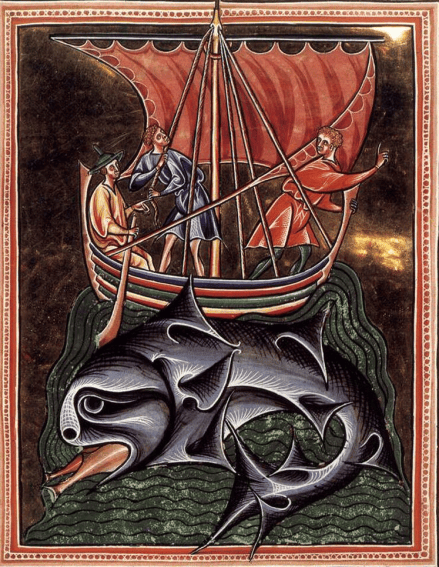
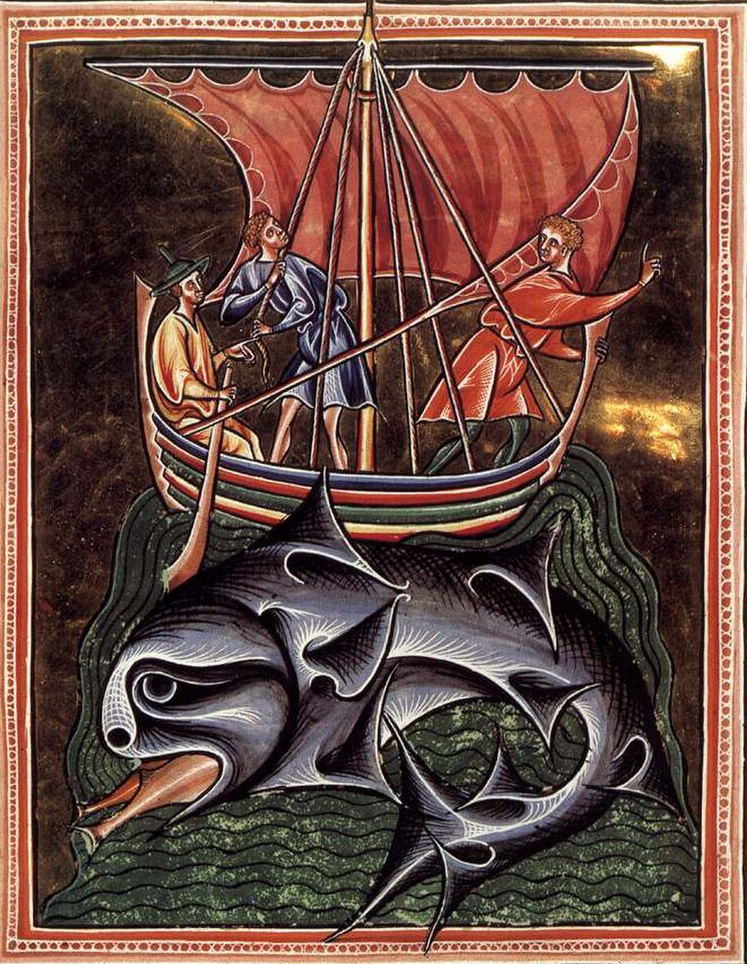
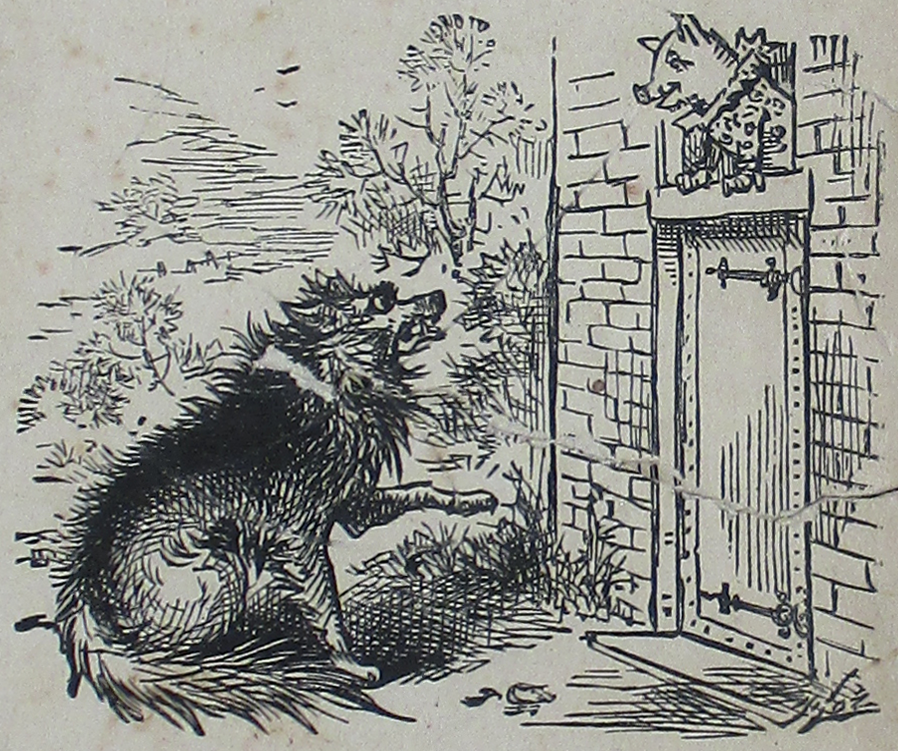
“I didn’t even pack for an ocean voyage! You clearly saw me get on the tour bus with no hat and said nothing. And the insurance waiver said nothing about depressed sea monsters on this trip!”

Again, I think it’s important to distinguish between a trope as a cliché and a trope as a common theme or motif. An underdog winning the day is a trope, but there are a million ways to tell that story. The reluctant hero is a trope (you might also call that an archetype), but why they’re reluctant and what pushes them into heroism is the interesting part, and incredibly variable. The novelty is the exploration part of the story, but the reader chooses a story based on what familiar emotional experience they want to be the framework for that exploration. At least according to new science and any number of writers who’ve said it long before now. Aside from freeing us from a lot of writing hangups, this also tells us a lot about how to make book blurbs more effective!

And while I’ve already touched on K-dramas here, there’s a bit more to the story of how they’ve helped change my mind about tropes that I’ll discuss in my next post.

Tropes, Pasta, and Self-Sabotage: A Reflection

It’s been a long time since my last post, but I’ve been easing back into writing fiction on the regular and have also had some interesting conversations with other creatives over the last few months, and all of that mixed together has given me some thoughts to share. Something I’m experiencing a major perspective shift about, as a writer, is the use of tropes.

In the past–and even at the beginning of this summer–I had a knee-jerk negative reaction to the mere mention of tropes. Part of the difficulty of discussing them stems from the fact that the literal definition of trope includes both the meaning cliché and common motif, device, or theme. It’s easy to conflate those definitions given the potential overlaps, but there’s a massive difference in the connotations, if nothing else. To be told your writing is cliché is a criticism at best, if not an insult. In my mind, at some point (possibly when I worked as an inventory supervisor at a big box bookstore) trope became a bad word.

The thing about major publishing companies, like all big companies, is that they chase market trends. You get some great original stuff sometimes that may or may not change the direction of a genre, but you also get a market that’s oversaturated with very similar stories all at the same time, with varying degrees of originality and quality. Some are excellent and others are frankly worn out and stale. I love spaghetti, but I don’t want bland, watery spaghetti, and I want other kinds of noodles, too: yakisoba or beef stroganoff or a pesto lasagna. Sometimes I want food that isn’t noodles, although, to be fair, I don’t think I’ve ever refused pasta. Same with books, at least for me. As a reader, I want quality and I want variety, and I had come to think of tropes as antithetical to that. So as a writer, I didn’t get why other writers often spoke of tropes in a positive light…because I thought they were talking about the cliché definition: bland, watery spaghetti.

Meanwhile, other writers have largely been talking about the other definition: common motifs, devices, and themes. The literary equivalent of ingredients, with a multitude of ways to prepare or combine them that may be predictable, surprising, or some balance between the two. For two years in a row, I was a speaker on a panel about tropes at InConjunction in Indianapolis, and it wasn’t until weeks after the second one this summer that I realized that what I thought we were discussing was not what we were actually discussing, because I was stuck on this idea about clichés. Well, that’s embarrassing. But I’m past the point in life where being embarrassed is more important than what I learned from it, so you get to hear about my goofy ass misunderstanding something for years at a time and what I’m now realizing has been a huge hangup in my own writing journey for decades.

To paraphrase something someone on the panel said this summer (apologies to my fellow panelists and the audience, because I can’t remember who said it), there’s nothing new under the sun, and the trick is not to come up with something that’s never been done, but to bring your own original voice and perspective. That advice is also not new, exactly, but in the context of rethinking what tropes represent to a writer and to their readers, it’s been sinking in for the first time that I have had such a hell of a time finishing things I start–even get hundreds of pages into–because I’m so inhibited about doing something predictable (with the negative association of the cliché) with a plot that I’ve made it so that there’s no path forward for myself. I can’t wrap up the story because you can’t have both a completely unpredictable and a completely emotionally satisfying conclusion to a story. If I’ve made a rule for myself, even subconsciously, that I can’t follow a story to an ending that feels natural because that would be “too obvious” or has “been done before”, then any ending I move toward will automatically feel wrong. To me. To my readers. That doesn’t mean there can’t be a twist or a surprise or an original take, but (1) the setup has to be in place for that to work and (2) twist endings are also (guess what?) a trope! I’ve had myself in a stalemate with endings for most of my writing life, and the few things I’ve managed to actually complete and publish have always been the result of me saying, often literally and out loud to my keyboard, “Fuck it! Let’s just do it!” to get over the logical fallacy I trapped myself in.

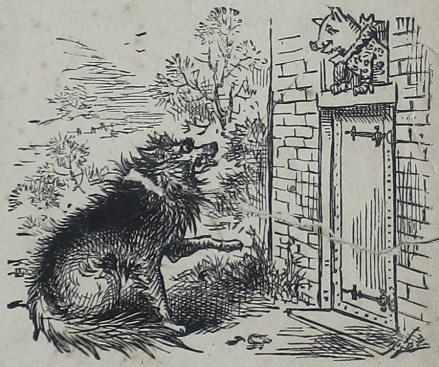
I can see where this is going. That pig is obviously going to throw a chamberpot over the wolf’s head and then the wolf will get cholera and all the pigs will be safe forever and this pig will be a hero and they will build statues of him in town squares for miles around.

There are two other things (aside from the tropes panel) that have shaken loose my trope-phobia and made me reconsider the role of tropes in the media I consume, as well as the differences I’m noticing between what I’m drawn to as a reader/viewer and my self-imposed rules for myself as a writer (which now seem very unreasonable). I’ll discuss them more in a later post, and you can laugh at me about them if you want, but I won’t care because (a) I won’t be able to hear you and (b) I’m too old to care if people on the internet laugh at me. Anyway, one of the things is SCIENCE and the other is K-dramas. Bet you’re curious now. If you’re not, (a) I can’t hear you and (b) I don’t care. Just kidding, I value all my readers and their perspectives, as long as you’re not rude.

InConjunction 2021 in Review

My first convention since lockdown was Inconjunction this past weekend (July 2-4) in Indianapolis, and it seemed to be everyone’s first event back. It was smaller and more subdued than usual, but that was all right–everyone was happy to see each other after two years apart, happy to welcome newcomers, and happy to respect one another’s social distancing and mask preferences and the guidelines laid out by the convention staff for safety. Many of us have experienced big life changes since we last saw our convention friends, and hugs were extra tight and not entirely dry-eyed.

I was a speaker on four panels: The Best Thing Ever! (What got you through 2020), Pantsing Prep (writing advice from and for those of us who write “by the seat of our pants” instead of outlining), Worldbuilding (writing tips for creating a well-built setting), and Books on Repeat (books we love to reread and why). My partners in crime the press, Per Bastet Publications, and I had a table in the vendor’s hall, as well, selling books and bookmarks.

May be an image of Sara Marian Deurell and jewelry
Holding down the fort at the Per Bastet table in the vendor hall (Photo by Molly Daniels)

All in all, it was a great event to come back on. The con staff are accessible, helpful, and fun to chat with, as well. I know it wasn’t easy to organize the convention this year, but they did a great job! The hotel, the Marriott East, hosts the event every year and is always pleasant, but this year the staff was over the top great. In spite of being understaffed, they went above and beyond to make sure things went smoothly for us, from the wait staff at the bar/restaurant to the cleaning staff. Shout out to all the people who worked hard so we could have fun and talk shop this weekend!

Next up is Imaginarium Convention in Louisville, Kentucky, July 9-11, and even though I’m still tired from this weekend, I can’t wait! It’s another one we attend every year and are always glad we did, and it will be in a new venue this time. This year they’re offering both an in-person and a virtual event. I’ll be a speaker on panels for both the live and the virtual shows, as well as running my third annual workshop, Crafting Cross-Genre Fiction.