Tropes, Pasta, and Self-Sabotage: A Reflection

It’s been a long time since my last post, but I’ve been easing back into writing fiction on the regular and have also had some interesting conversations with other creatives over the last few months, and all of that mixed together has given me some thoughts to share. Something I’m experiencing a major perspective shift about, as a writer, is the use of tropes.

In the past–and even at the beginning of this summer–I had a knee-jerk negative reaction to the mere mention of tropes. Part of the difficulty of discussing them stems from the fact that the literal definition of trope includes both the meaning cliché and common motif, device, or theme. It’s easy to conflate those definitions given the potential overlaps, but there’s a massive difference in the connotations, if nothing else. To be told your writing is cliché is a criticism at best, if not an insult. In my mind, at some point (possibly when I worked as an inventory supervisor at a big box bookstore) trope became a bad word.

The thing about major publishing companies, like all big companies, is that they chase market trends. You get some great original stuff sometimes that may or may not change the direction of a genre, but you also get a market that’s oversaturated with very similar stories all at the same time, with varying degrees of originality and quality. Some are excellent and others are frankly worn out and stale. I love spaghetti, but I don’t want bland, watery spaghetti, and I want other kinds of noodles, too: yakisoba or beef stroganoff or a pesto lasagna. Sometimes I want food that isn’t noodles, although, to be fair, I don’t think I’ve ever refused pasta. Same with books, at least for me. As a reader, I want quality and I want variety, and I had come to think of tropes as antithetical to that. So as a writer, I didn’t get why other writers often spoke of tropes in a positive light…because I thought they were talking about the cliché definition: bland, watery spaghetti.

Meanwhile, other writers have largely been talking about the other definition: common motifs, devices, and themes. The literary equivalent of ingredients, with a multitude of ways to prepare or combine them that may be predictable, surprising, or some balance between the two. For two years in a row, I was a speaker on a panel about tropes at InConjunction in Indianapolis, and it wasn’t until weeks after the second one this summer that I realized that what I thought we were discussing was not what we were actually discussing, because I was stuck on this idea about clichés. Well, that’s embarrassing. But I’m past the point in life where being embarrassed is more important than what I learned from it, so you get to hear about my goofy ass misunderstanding something for years at a time and what I’m now realizing has been a huge hangup in my own writing journey for decades.

To paraphrase something someone on the panel said this summer (apologies to my fellow panelists and the audience, because I can’t remember who said it), there’s nothing new under the sun, and the trick is not to come up with something that’s never been done, but to bring your own original voice and perspective. That advice is also not new, exactly, but in the context of rethinking what tropes represent to a writer and to their readers, it’s been sinking in for the first time that I have had such a hell of a time finishing things I start–even get hundreds of pages into–because I’m so inhibited about doing something predictable (with the negative association of the cliché) with a plot that I’ve made it so that there’s no path forward for myself. I can’t wrap up the story because you can’t have both a completely unpredictable and a completely emotionally satisfying conclusion to a story. If I’ve made a rule for myself, even subconsciously, that I can’t follow a story to an ending that feels natural because that would be “too obvious” or has “been done before”, then any ending I move toward will automatically feel wrong. To me. To my readers. That doesn’t mean there can’t be a twist or a surprise or an original take, but (1) the setup has to be in place for that to work and (2) twist endings are also (guess what?) a trope! I’ve had myself in a stalemate with endings for most of my writing life, and the few things I’ve managed to actually complete and publish have always been the result of me saying, often literally and out loud to my keyboard, “Fuck it! Let’s just do it!” to get over the logical fallacy I trapped myself in.

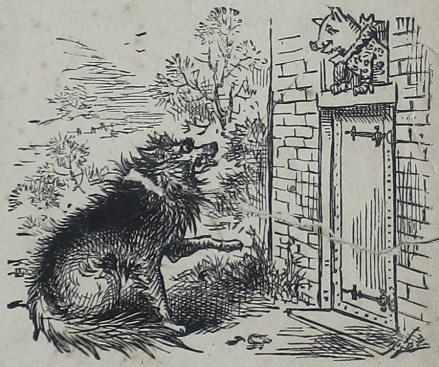
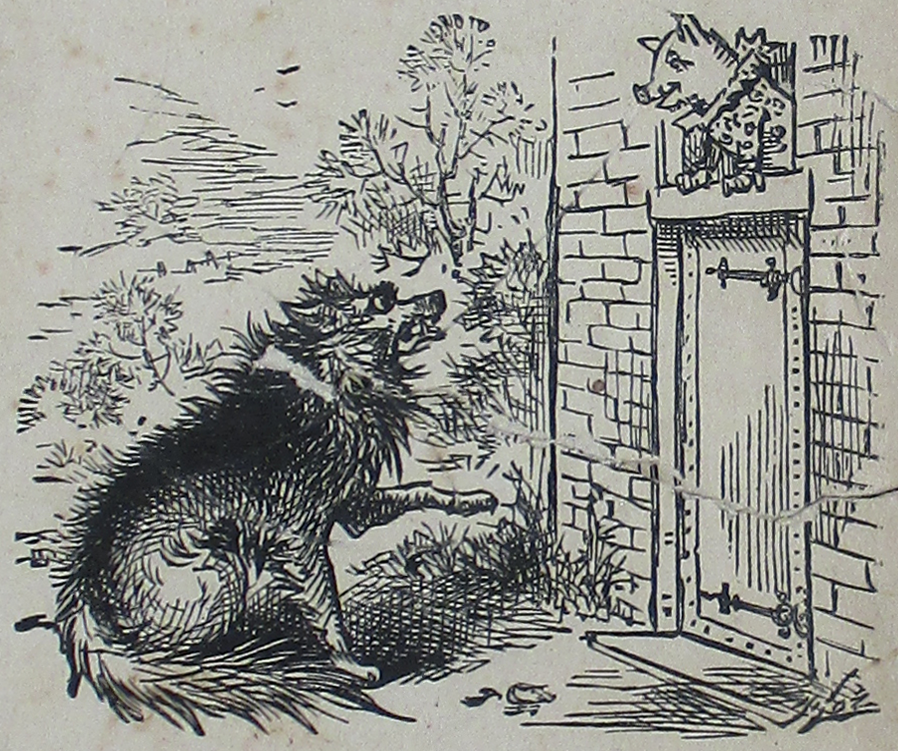
I can see where this is going. That pig is obviously going to throw a chamberpot over the wolf’s head and then the wolf will get cholera and all the pigs will be safe forever and this pig will be a hero and they will build statues of him in town squares for miles around.

There are two other things (aside from the tropes panel) that have shaken loose my trope-phobia and made me reconsider the role of tropes in the media I consume, as well as the differences I’m noticing between what I’m drawn to as a reader/viewer and my self-imposed rules for myself as a writer (which now seem very unreasonable). I’ll discuss them more in a later post, and you can laugh at me about them if you want, but I won’t care because (a) I won’t be able to hear you and (b) I’m too old to care if people on the internet laugh at me. Anyway, one of the things is SCIENCE and the other is K-dramas. Bet you’re curious now. If you’re not, (a) I can’t hear you and (b) I don’t care. Just kidding, I value all my readers and their perspectives, as long as you’re not rude.

My First Workshop: Crafting Cross-Genre Fiction

I ran my first workshop last weekend at Imaginarium 2019 (the most awesome event in Louisville). Given that I am not a morning person, that I’d never run a workshop before, and that I stayed up late on Saturday night because (a) friends, (b) beer, and (c) Imaginarium entertainment, I thought it went pretty well!

My topic was Crafting Cross-Genre Fiction, which is something I love to do and love to talk about with other writers. I will say that I think in the future I would open up some audience participation early in the workshop, right after introducing myself. I think things really started to come alive when I asked people if they already had an idea or a work in progress that blended genres, and I wish I had opened with that instead of giving my talk right off the bat (particularly given how well I speak in the morning.) So I file that away for next time, and pass it on to others out there who might be doing their first workshops and are looking for tips.

But what I was most pleased with was how my activity went! Here is what I did: before the convention, I made a spreadsheet with 22 genre and subgenre categories and 22 “wildcard” story or world elements. I coded playing cards to those 44 options (I plan to modify this method*). At the workshop, everyone drew 2 cards from the wildcard stack and 2 cards from the genre/subgenre stack. Everyone was allowed to trade out one card if they wished to. Then we spent about 10 minutes writing a “book blurb” (the teaser on the back of a book) based on the elements we drew.

Here's exactly how my 9am workshop was. Minus the dead animals hanging from the ceiling.

Funny thing was, three of us (myself included) randomly ended up with elements that described something we had already written or were working on! Some crazy serendipity there.

Everyone who attended came up with really great ideas, every one of which I would totally read if I came across it! Tried it out back at the vendor table with some of my cohorts, too, and they came up with awesome ideas, as well. So I’m very happy with the exercise, but for the sake of simplicity I think *the coding method could be tweaked. There’s probably an easier method with the cards and cards have the advantage that once one is drawn, no one else will get the same thing as the others. I would definitely use two different decks of two different colors in the future to ensure that the two stacks stay distinct. It might also be reasonable in a small group to cut out four of the 44 options and use four 20-sided dice of two different colors, and just re-roll if anything gets repeated. Or you could draw slips from two separate hats! If anyone thinks of a better method, feel free to comment and tell me!

If you want to give the game a shot, pick your way to randomize and play! Here are my lists, but you can make up your own wildcards or use genres or subgenres I didn’t think of:

#Genres & Subs (pick 2)#Wildcards (pick 2)
1FantasyAon a spaceship
2Science FictionBin the Jazz Age
3RomanceCin an ancient civilization
4MysteryDwith humorous elements
5ThrillerEwith a dragon
6HorrorFin a foreign country
7Historical FictionGwith a ghost
8SuspenseHwith a robot
9ComedyIduring the Revolution
10ParanormalJwhen pirates show up
11SurvivalKin a hidden world
12SteampunkLafter civilization crumbles
13CyberpunkMwith a cat
14DystopianNwith supernatural creatures
15Alternate HistoryOand magic
16WesternPleading to a trial
17NoirQwhile on the run from the mob
18FuturisticRwhile on the run from agents
19RetroSbefore recorded history
20GothicTafter the village is raided
21SatireUwhen an invention changes everything
22Coming-of-AgeVduring a family reunion

Here is one of the combos I drew and the blurb I did based on it:

Romance / Alternate History / On a spaceship / Leading to a trial

Tsarina Catherine the Great is at the height of her reign when she is taken away by the dashing captain of a spaceship from an alien world. While Pugachev takes control of Russia in her absence, the Tsarina falls in love with Captain Gugog*. But the captain’s superiors demand her return and court-martial Gugog for interfering with Earth’s affairs. How will Catherine and Gugog sustain the flame they have kindled as the forces of two worlds try to tear them asunder?

*Gugog is a random thing my family says, as in, “You’re such a gugog!” or “That thingy, you know, the gugog!” Since I couldn’t think of a name off the top of my head, Captain Gugog.